SF6 Handling Checklist Before GIS Return to Service
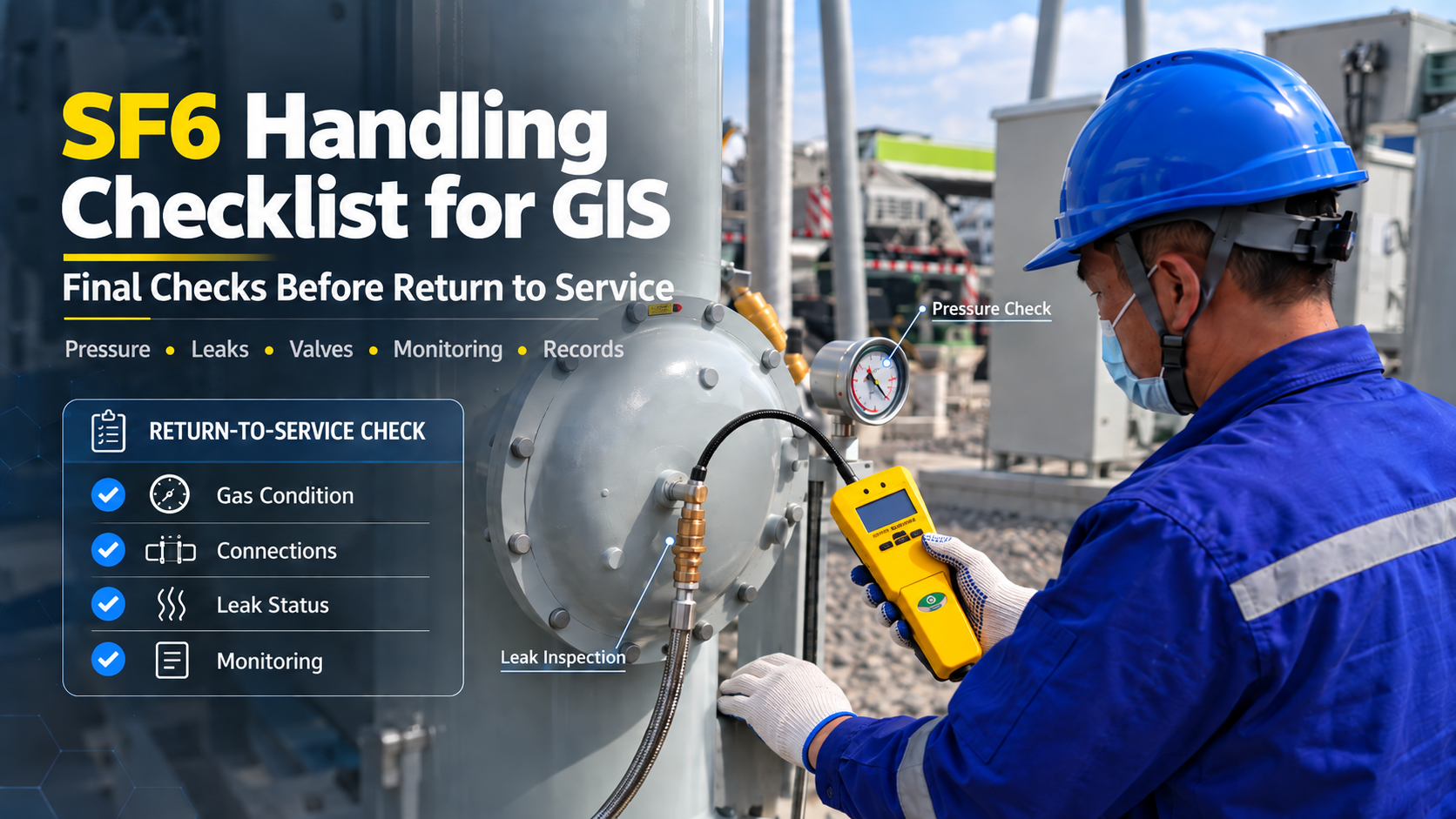
After SF6 handling, do not return the GIS to service until the final gas condition, connections, leak status, valve positions, monitoring systems, and maintenance records have been checked.
SF6 handling may include gas recovery, evacuation, filling, or maintenance involving the gas system. Once this work is complete, verify the GIS before normal operation resumes.
Use the equipment manufacturer’s instructions, utility procedures, and project requirements as the basis for acceptance. This checklist does not replace site-specific maintenance procedures or acceptance criteria.
1. Confirm the Final SF6 Filling Condition
Confirm that filling is complete and that the final pressure or density meets the equipment specification.
Check:
- Final filling pressure or density
- Temperature-compensated density reading, where applicable
- Stability of the reading after filling
- Any unexpected change after the reading has stabilized
Focus on the final condition rather than repeating the filling procedure.
2. Check SF6 Pressure or Density
Verify the pressure or density reading before returning the GIS to service.
Check:
- Pressure gauge or density monitor reading
- Density monitor status
- Alarm settings and indication status
- Abnormally low or unstable readings
The reading should be stable and within the specified operating range.
A stable reading helps confirm that the gas compartment has reached the required operating condition and that no immediate abnormal change is present.
3. Verify SF6 Gas Quality When Required
A full gas analysis may not be required after every maintenance task.
After SF6 handling, perform gas analysis when required by the maintenance procedure, equipment manufacturer, utility specification, or project requirements.
Typical measurements may include:
- SF6 purity
- Moisture
- Decomposition products
Record the results when gas analysis is performed.
Use the applicable maintenance or project requirements to determine acceptable gas-quality limits. Do not apply one general limit to every GIS application.
4. Inspect Valves, Flanges, and Gas Connections
Inspect all gas connections that were opened, disconnected, or serviced during maintenance.
Check:
- Valves
- Flanges
- Couplings
- Service ports
- Hose connection points
- Sealing surfaces
Confirm that all connections have been restored correctly, protective caps are installed, and there is no visible damage or loose hardware.
5. Perform a Post-Filling Leak Check
Leak checking is an important part of the final SF6 handling inspection.
Focus first on points that were opened, disconnected, or disturbed during maintenance.
Give priority to:
- Service ports
- Valve connections
- Flanges
- Couplings
- Sealing points that were serviced
Use the leak-detection method required by the maintenance procedure or project specification.
Confirm that the inspected points meet the applicable leak acceptance requirements before closing the work.
This check helps identify leaks associated with disturbed seals, fittings, or service connections before the GIS returns to operation.
6. Remove Temporary Hoses and Service Connections
Remove all temporary SF6 handling equipment after the work is complete.
Check that the following items have been removed:
- Recovery hoses
- Filling hoses
- Vacuum hoses
- Temporary adapters
- Test equipment
- Service tools
Confirm that all service ports are closed and protective caps are installed.
Perform a final visual check to make sure no hoses, fittings, or tools remain attached.
7. Confirm Valve Positions
Return all valves to the required operating position before handover.
Check:
- Gas valves
- Service valves
- Isolation valves
- Temporary bypass arrangements, if used
If the maintenance procedure requires independent verification, confirm the final valve positions before returning the GIS to service.
8. Restore Monitoring and Alarm Systems
If the GIS uses monitoring or alarm systems, confirm that they are back in normal operation after SF6 handling.
Check:
- Density monitors
- Pressure sensors
- Fixed SF6 area monitoring systems
- Remote alarm interfaces
Verify that:
- Readings are normal
- Active alarms have been cleared
- No abnormal status remains
- Systems are no longer in test or bypass mode
These systems provide continued supervision of gas condition and abnormal conditions after maintenance.
9. Record the Final Maintenance Data
Complete the maintenance record before handover.
Record the information required by the applicable procedure, such as:
- Final pressure or density
- SF6 quantity added or recovered, typically recorded by mass
- Gas analysis results, if performed
- Leak-check results
- Maintenance date
- Operator identification
- Equipment identification
- Abnormal findings
- Corrective actions taken
Accurate records provide traceability for future inspection and maintenance and document the final condition of the GIS after SF6 handling.
10. Complete the Final Return-to-Service Check
Use a final checklist before returning the GIS to normal operation.
| Check Item | What to Confirm |
|---|---|
| SF6 filling | Final pressure or density meets the specified requirement |
| Pressure / density | Stable and within the specified range |
| Gas quality | Verified when required |
| Valves | In the required operating position |
| Connections | Correctly restored and secured |
| Leak check | Meets the applicable acceptance requirements |
| Hoses and tools | Removed and service ports capped |
| Monitoring | Normal readings and alarms cleared |
| Documentation | Complete and recorded |
Complete All Checks Before Returning GIS to Service
The return-to-service process is complete only after the final condition of the GIS has been checked.
Confirm the pressure or density, gas quality when required, connections, leak status, valve positions, monitoring systems, and maintenance records before handover.
Once the required checks are complete and the results meet the applicable requirements, the GIS can be returned to service.
For help matching SF6 handling equipment to a GIS maintenance project, provide the equipment type, SF6 quantity, pressure and vacuum requirements, power supply, connection details, and site conditions when requesting a configuration.
Frequently Asked Questions
Is SF6 gas analysis required after every SF6 handling job?
Not always. Perform gas analysis when required by the equipment manufacturer, maintenance procedure, utility specification, equipment condition, or project requirements.
Where should leak checks focus after SF6 filling?
Start with service ports, valves, flanges, couplings, and sealing points that were opened or disturbed during the work.
What should be recorded after SF6 handling?
Record the final pressure or density, SF6 quantity added or recovered, gas-analysis results if performed, leak-check results, equipment identification, maintenance date, and corrective actions.
What should be checked before GIS returns to service?
Check the final gas condition, pressure or density, gas quality when required, connections, leak status, valve positions, monitoring systems, and maintenance records.