SF6 Gas Recovery and Purification for Sustainable Power Maintenance
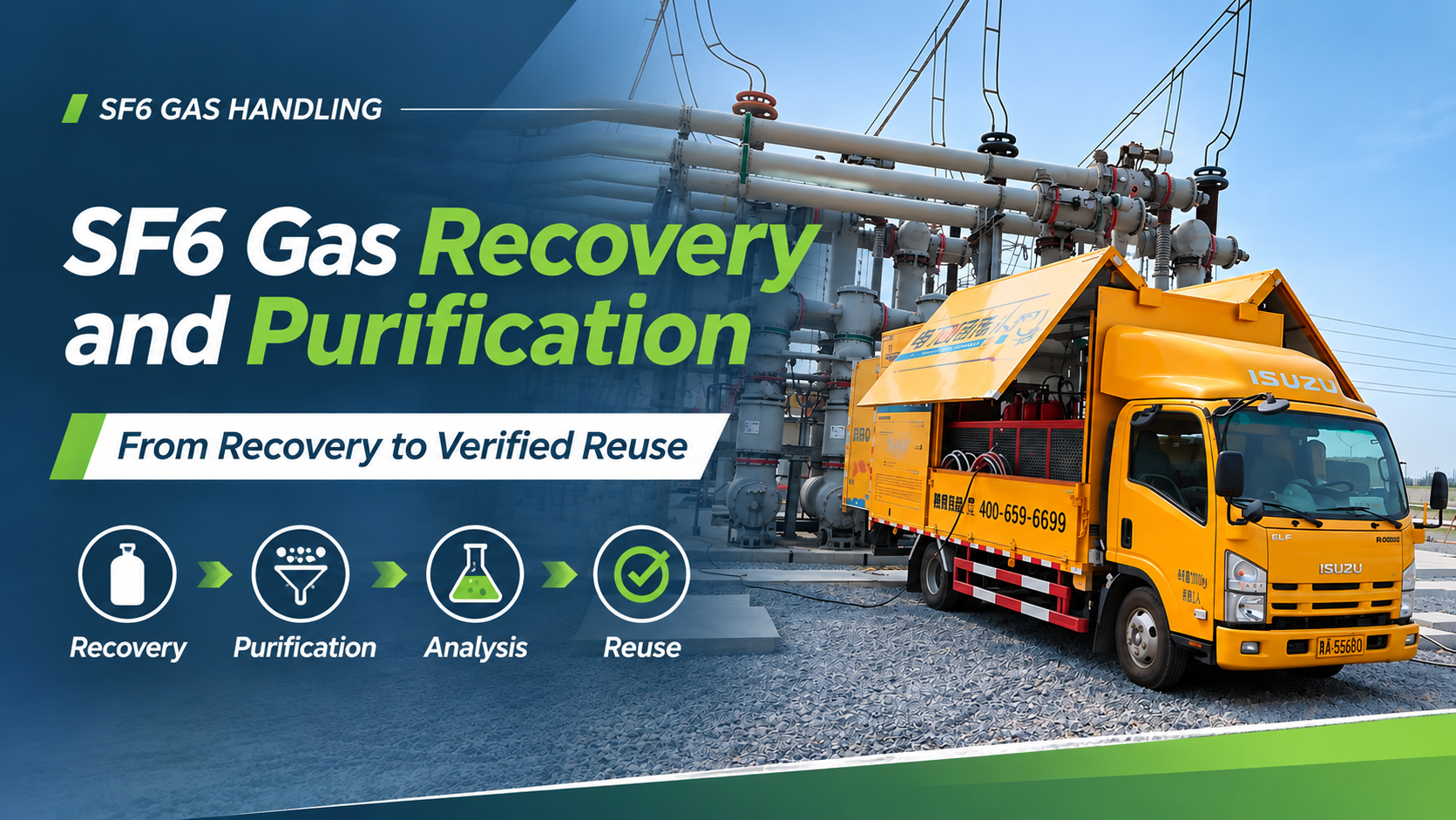
SF6 recovery prevents gas release during switchgear maintenance. Purification removes moisture, particles, and other contaminants from recovered gas. SF6 gas recovery and purification serve different purposes but often work together.
Recovery alone does not show whether SF6 is ready for reuse. Teams must check gas condition and treatment needs first. Purity, moisture, decomposition products, storage conditions, and project requirements guide the next step. Gas should remain contained, tested, treated when needed, and separated by quality status.
Why Recovery and Purification Need to Work Together
SF6 recovery transfers gas from GIS, circuit breakers, or other gas compartments into suitable storage. Depending on the equipment, the same system may support evacuation, filtration, storage, and refilling.
Recovered SF6 may contain moisture, particles, air, or decomposition products. Routine filtration removes some contaminants. Deeper treatment may require purification or rectification. Treatment should follow the gas condition, not the fact that recovery has finished. Equipment selection also depends on the task. Cylinder transfer, workshop treatment, and large GIS projects require different functions and capacities.
From Recovery to Reuse: A Controlled Gas Handling Process
Before connecting hoses, identify the equipment, estimate the gas quantity, and confirm receiving capacity. Decide where the recovered gas will go and what treatment it may need.
Recover and Contain the Gas
The recovery unit transfers SF6 into a compatible storage tank or external cylinder. Hoses, couplings, valves, and storage capacity should match the gas quantity and site conditions. Self-sealing connections can reduce gas loss during connection and disconnection. Where required, evacuate the connected gas path before opening the SF6 compartment. Recovery rate matters, but site access, hose routing, storage, power supply, and recovery condition also affect field performance.
Treat and Verify the Gas
Recovered gas may need dehydration, filtration, or deeper purification before reuse. Rectification or regeneration may be required when routine treatment cannot restore the required condition. Equipment functions should remain clear because manufacturers may use treatment terms differently.
Gas analysis should check purity, moisture, and relevant decomposition products before reuse. The results determine whether the gas can return to service or needs more treatment.
Prepare the Gas for Refilling
Keep qualified gas separate from untreated or unverified gas. Clear segregation protects traceability and prevents different gas conditions from mixing.
After maintenance, prepare the serviced compartment according to the required procedure. This may include evacuation and tightness checks. Refill only with gas that meets the required condition.
When Is Recovered SF6 Ready for Reuse?
Recovery does not automatically make SF6 suitable for reuse. The decision should follow measured gas condition and applicable acceptance criteria. IEC 60480 addresses the reuse of recovered SF6 and its mixtures in electrical equipment. IEC 60376 defines requirements for technical-grade SF6 used in electrical equipment.
Operators should also follow equipment requirements, project specifications, and site procedures. No product specification should become a universal reuse limit.
| Gas Condition | Typical Decision |
|---|---|
| Gas meets the required reuse criteria | Keep it segregated and prepare it for refilling |
| Moisture or removable impurities remain too high | Apply suitable dehydration or purification |
| Gas requires deeper treatment | Use rectification or regeneration equipment |
| Gas condition remains uncertain | Keep it isolated and complete further analysis |
Storage vessels and transfer paths should separate untreated, treated, and verified gas. Teams should also record gas origin, treatment status, analysis results, and final destination where required.
How Does the Required Treatment Level Change?
Not every recovered SF6 batch needs the same treatment. Routine filtration suits normal gas handling when the main task involves particle removal and basic contamination control. Dehydration and purification become more important when moisture or removable impurities exceed the required condition.
Rectification or regeneration applies when routine purification cannot restore the gas adequately. Online treatment serves a different application and may address excessive moisture without a normal shutdown. This requires compatible equipment, suitable switchgear interfaces, and approved operating procedures.
Treatment should match the actual gas condition. Excess treatment adds cost and complexity. Insufficient treatment may leave the gas outside the required condition.
Choosing the Right SF6 Recovery and Purification Equipment
Start with the maintenance task. Estimate the SF6 quantity, required recovery condition, storage method, gas condition, treatment level, and refilling plan.
Key selection factors include:
- SF6 quantity
- required recovery condition
- gas quality
- treatment level
- storage capacity
- processing time
- site access
- hose routing
- power supply
- on-site or workshop treatment
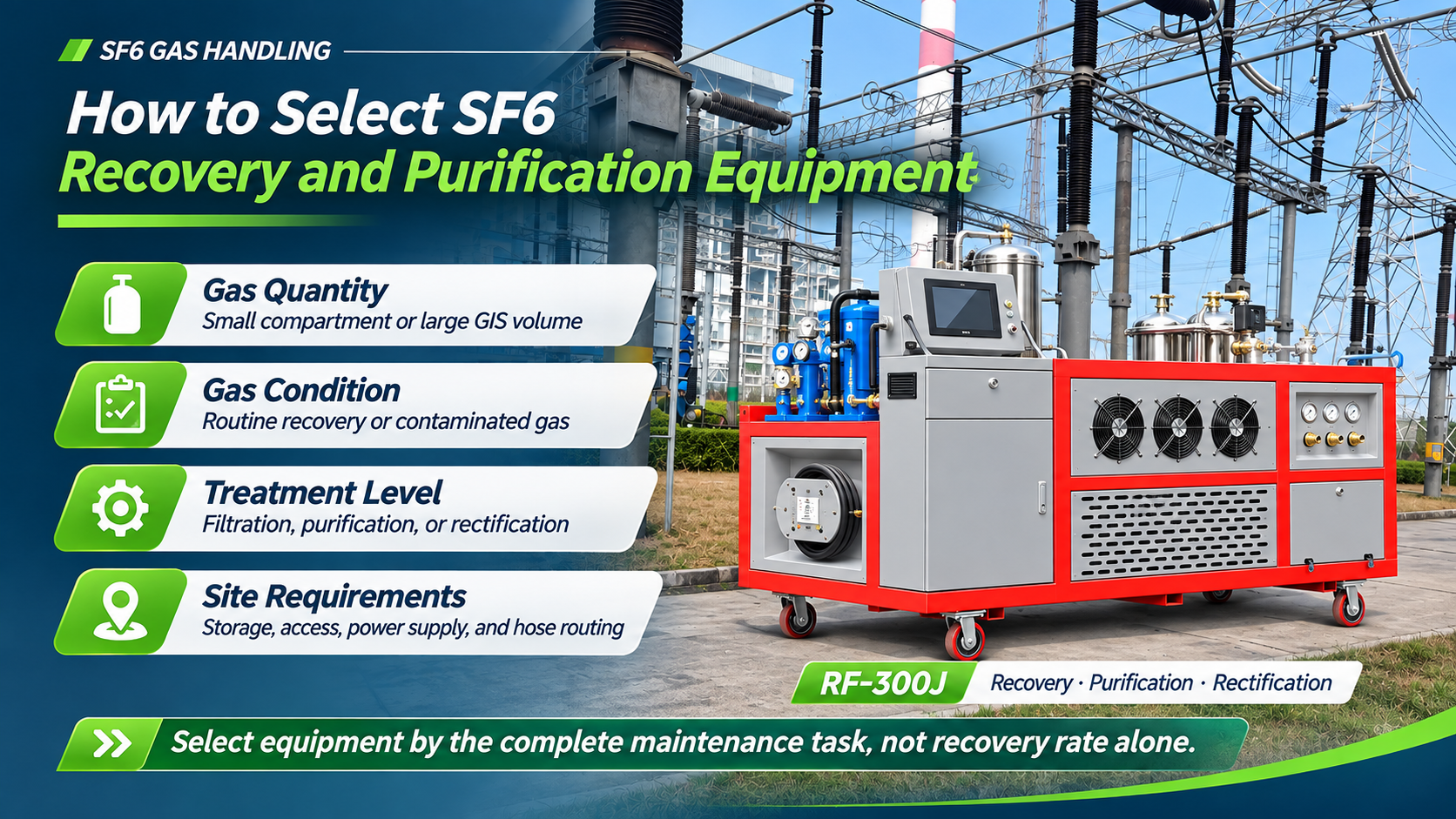
The RF-300J suits applications that require recovery, purification, and deeper gas treatment. It targets contaminated SF6 that needs more than routine filtration.
The RF-391 serves larger GIS projects that need high-capacity recovery, filtration, storage, evacuation, and refilling. It should not replace dedicated rectification equipment unless the selected configuration provides that function.
Recovery rate alone cannot define equipment selection. Storage, treatment capability, site logistics, and gas condition may matter just as much.
Building a More Sustainable SF6 Maintenance Workflow
Sustainable SF6 maintenance starts with controlling the full gas-handling process. Recover the gas, check its condition, select the required treatment, and keep different gas conditions separated. Prepare enough storage and suitable transfer equipment before work begins.
This approach can reduce unnecessary SF6 loss and improve maintenance planning. The right SF6 handling system depends on what must happen to the gas after recovery, not recovery rate alone. Define the treatment requirement first, then match the equipment to the job.
For help selecting SF6 recovery, purification, or gas-handling equipment, contact [email protected] with your gas quantity and treatment requirements.
Frequently Asked Questions
Can recovered SF6 be reused directly?
Not always. Check purity, moisture, decomposition products, and applicable reuse criteria before refilling. Gas outside the required condition may need more treatment.
What is the difference between purification and rectification?
Purification usually addresses moisture, particles, and removable impurities. Rectification or regeneration provides deeper treatment when routine purification cannot restore the required condition.
Is a higher SF6 recovery rate always better?
No. Storage, treatment capability, gas quantity, site access, and final recovery condition also affect equipment selection.
Does every SF6 recovery unit provide purification?
No. Recovery, filtration, purification, and rectification are different functions. Verify the equipment configuration before selecting a system.