Why SF6 Gas Analysis Comes First in Gas Handling
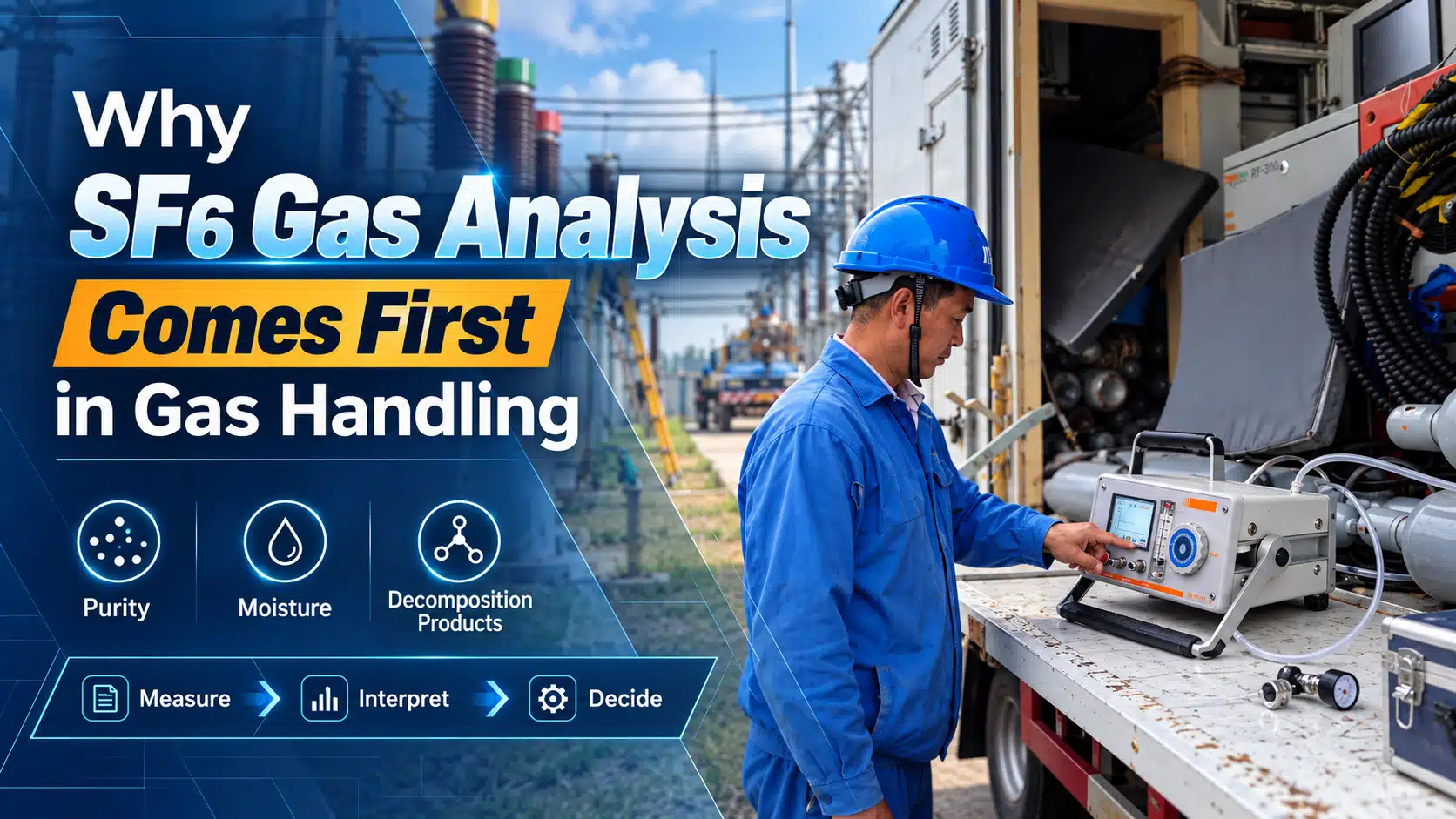
SF6 gas quality can change during service. Electrical activity, moisture ingress, gas mixing, and previous handling can affect it. Visual inspection cannot show purity, moisture, or decomposition products inside a gas compartment. Pressure and density gauges cannot show these properties either.
SF6 gas analysis gives operators direct information about the gas before handling begins. It focuses on three main areas: purity, moisture, and decomposition products. Each measurement answers a different question. Together, they show whether the gas matches the expected condition or needs further review. Operators need this information before they plan the next step. Measuring first reduces uncertainty and gives later decisions a factual basis.
What SF6 Gas Analysis Shows
SF6 gas analysis shows the current quality of the gas. It can reveal dilution, increased moisture, or signs of gas degradation. It also creates a baseline before maintenance or other gas-handling work. Maintenance teams can compare current results with earlier measurements from the same equipment. Repeated measurements can show gradual changes that one isolated reading may miss. For example, a rising moisture trend deserves more attention than one unexplained value.
Measurement history also helps engineers relate changes to maintenance, operating events, or previous handling. Operators can review measured data with equipment history and operating conditions instead of assuming that the gas remains in its previous state. This reduces uncertainty before work begins.
What to Measure
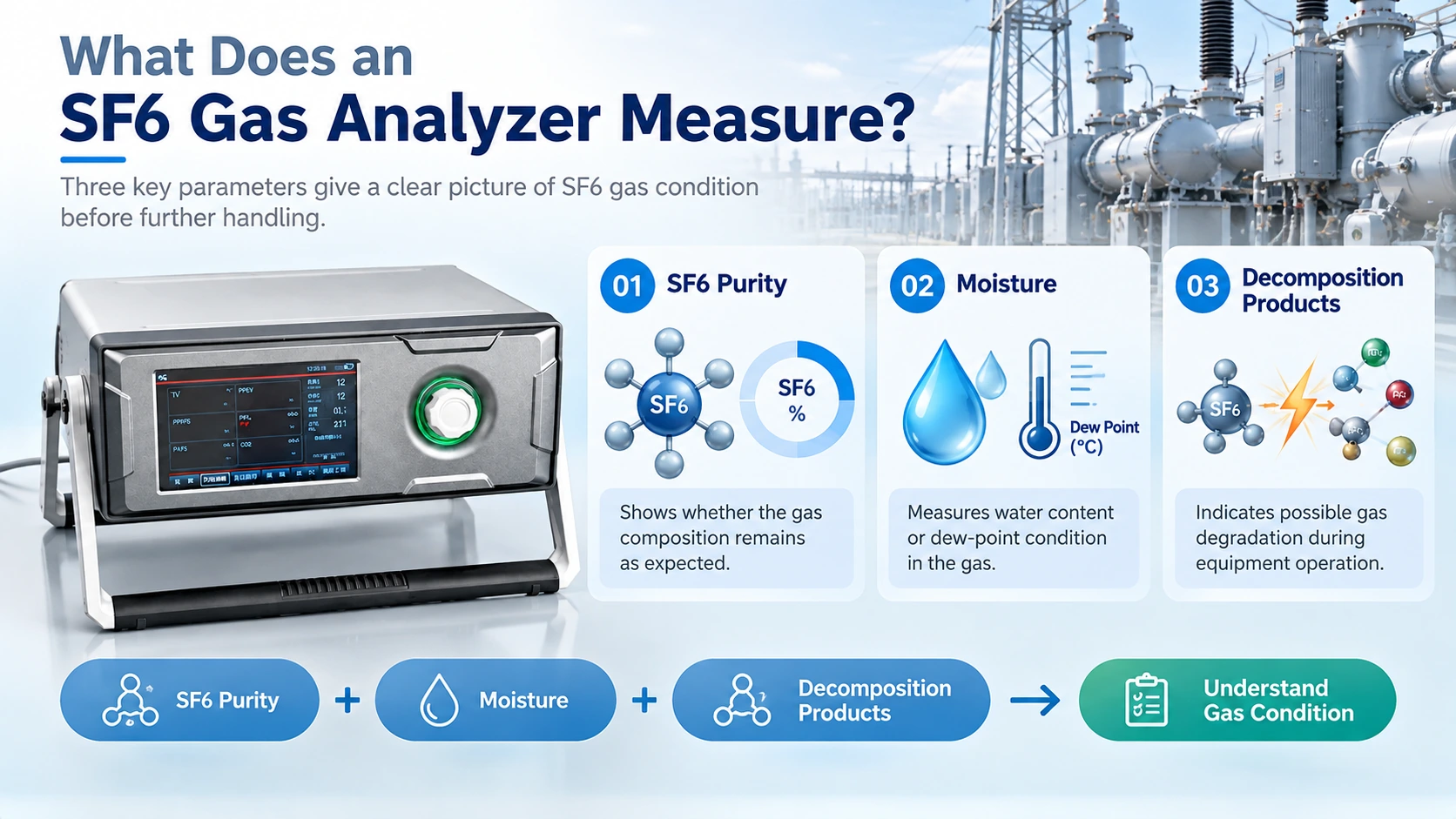
Most SF6 gas analysis focuses on purity, moisture, and decomposition products. These parameters describe different parts of gas quality. Some multi-parameter analyzers measure all three with one instrument.
| Parameter | Main Question | What an Abnormal Result May Indicate |
|---|---|---|
| SF6 purity | Is the gas composition as expected? | Dilution, mixing, or contamination |
| Moisture | How much water is present? | Moisture ingress or a handling issue |
| Decomposition products | Has the gas changed during service? | Gas degradation or abnormal operating conditions |
SF6 Purity
Purity shows the proportion of SF6 in the gas sample. Air or other gases can lower the measured concentration. Previous filling, maintenance, or gas mixing can also change the composition. A low purity result does not identify the cause by itself. It shows that the composition differs from the expected condition, so operators should review equipment history and previous handling records.
Purity answers one main question: does the gas contain the expected SF6 concentration? It does not describe the complete gas quality. Moisture and decomposition products still need to be considered.
Moisture
Moisture shows how much water is present in the gas. An analyzer may report the result as a concentration or dew point. Moisture can enter during maintenance, filling, sampling, or other handling work. Equipment condition can also affect moisture levels.
An abnormal moisture result does not identify the cause by itself. Operators should compare it with previous measurements and maintenance history. The reading shows whether moisture needs further attention and forms part of the overall gas assessment.
Decomposition Products
Electrical energy can cause SF6 to decompose during equipment operation. Arcing and partial discharge can increase this decomposition, while moisture and air can contribute to further reaction products. Decomposition-product measurements can show whether the gas experienced electrical stress or degradation.
An abnormal result does not identify a specific equipment fault. It can show that the equipment needs further inspection or that handling requires additional precautions. Analyzer configuration determines which diagnostic gases the instrument measures, but the purpose remains the same: detect evidence of gas degradation or abnormal operation.
Why Sampling Matters
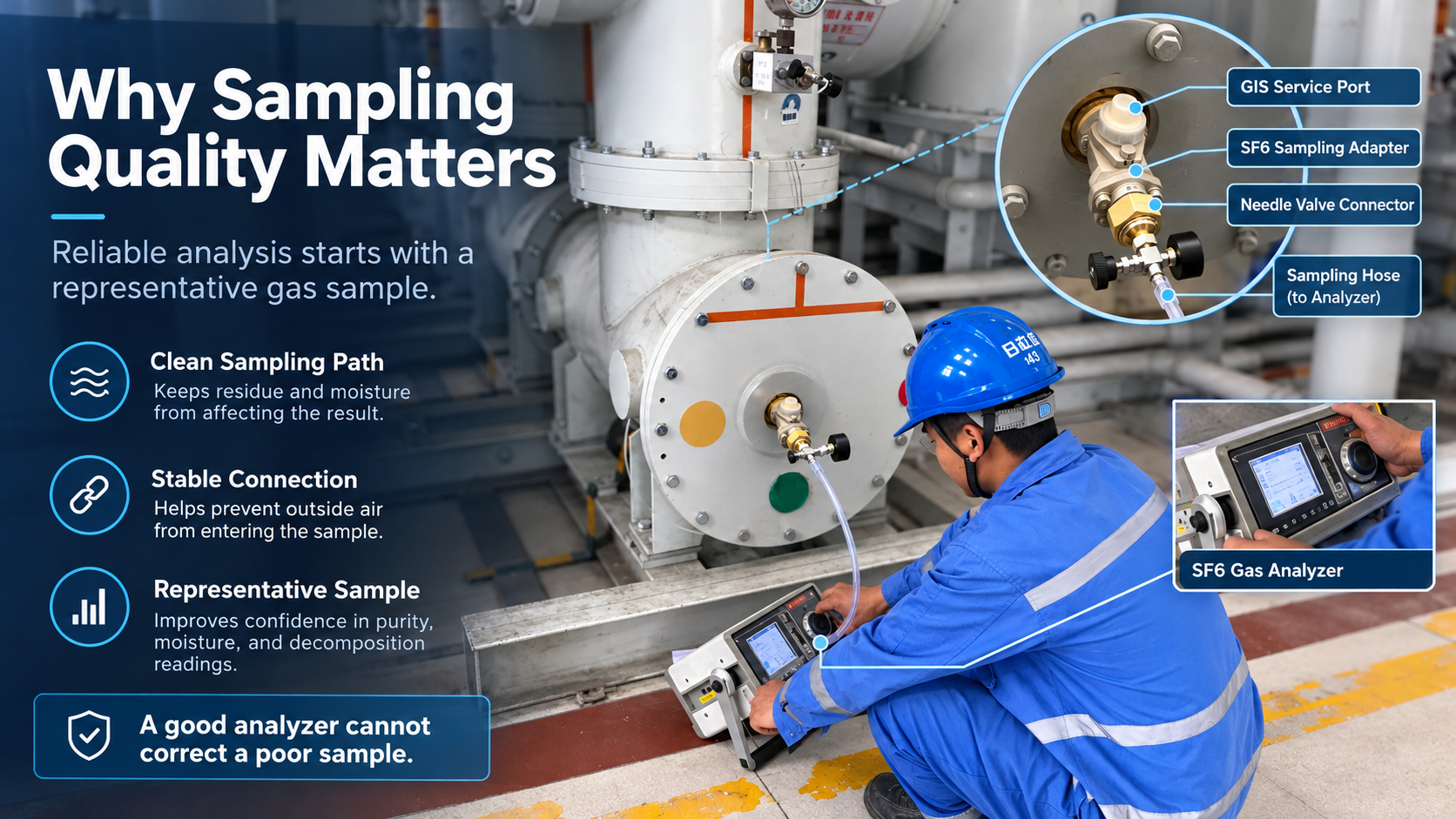
Reliable analysis starts with a representative sample. The sample should represent the gas inside the compartment without interference from residual gas, moisture, or contamination in the sampling path. Operators should use clean, dry sampling hoses and suitable connections. Residual gas, moisture, or dirt can affect the reading, and moisture measurement is particularly sensitive to poor sampling conditions. Operators should condition the sampling line according to the analyzer procedure before measurement.
Air or moisture should not enter during connection and sampling. The analyzer must also reach its required operating condition before the test begins. Operators should confirm its calibration status and follow the manufacturer’s measurement procedure. A good analyzer cannot correct a poor sample. Sampling quality and instrument condition both affect the reliability of the result.
How to Read the Results
Do not judge gas quality from one parameter alone. Normal purity does not prove that the overall gas quality is acceptable. Moisture may still be high, or decomposition products may show abnormal conditions. Operators should review purity, moisture, and decomposition-product results together.
Current measurements should also be compared with reliable historical data when available. Equipment age, recent maintenance, operating history, and previous gas handling can help explain changes. Trends often provide more useful information than one isolated result. One measurement shows the condition at one moment, while repeated measurements show whether the gas remains stable or continues to change.
Operators should compare results with applicable manufacturer requirements, project specifications, or relevant standards. The correct reference depends on the equipment and the purpose of the test. Consider a simple example: purity may remain normal while moisture increases. In another case, purity and moisture may look normal while decomposition products increase. Purity alone would miss both conditions.
The analyzer provides measurement data, but engineers still need to interpret that data in context. This is where SF6 gas analysis becomes useful for maintenance decisions.
What Abnormal Results Can Indicate
Low purity may indicate dilution, gas mixing, or contamination. It may also reflect earlier filling or top-up work. High moisture may indicate moisture ingress or a previous handling problem. Operators should review equipment history, recent maintenance, and earlier measurements before deciding what caused either change.
Elevated decomposition products may indicate gas degradation or abnormal electrical activity. Arcing and partial discharge can leave chemical evidence in the gas. These results can support a decision to inspect the equipment further.
Several abnormal parameters together provide stronger evidence than one isolated value. A change in purity combined with high moisture or decomposition products deserves closer review. The measurements still require interpretation, but they reduce uncertainty about the actual gas quality. SF6 gas analysis does not diagnose every equipment fault. It shows changes in the gas that can support further investigation.
How Analysis Supports Gas Handling
Measurement is only the first step. Operators must interpret the results before using them for gas-handling decisions. Equipment history, earlier measurements, operating conditions, and applicable requirements provide the needed context. This prevents one abnormal value from driving the wrong action. It also prevents normal purity from hiding abnormal moisture or decomposition products.
The results can support decisions about maintenance, recovery, transfer, storage, or further inspection. Gas with an uncertain status may require different preparation from gas with documented results. Abnormal readings may also require additional precautions. A clear analysis record improves traceability, so operators should record the measured gas quality before recovery, transfer, or other handling work. Later teams can compare this record with measurements taken during future maintenance.
Analysis also prevents gas with an unknown status from being treated as known-condition gas. Old records or previous operating experience may no longer represent the current state. The decision process is simple: Measure → Interpret → Decide. The analyzer provides the data. Operators interpret it against equipment history and applicable requirements. The combined information supports the next handling decision. SF6 gas analysis links gas quality with gas handling. Measurement replaces assumption with evidence.
From Measurement to Decision
Good SF6 gas handling starts with reliable information. Purity, moisture, and decomposition-product measurements show different parts of gas quality. Good sampling and correct interpretation make those measurements useful.
The value of SF6 gas analysis does not end with the analyzer reading. The results provide evidence about the actual state of the gas. Operators can use that evidence to plan maintenance, recovery, transfer, storage, or further inspection. Gas analysis reduces uncertainty before handling begins and gives later decisions a measurable basis. Good gas handling starts with good information.
For SF6 gas analysis equipment or project requirements, contact [email protected].
Frequently Asked Questions
What does SF6 gas analysis measure?
It commonly measures SF6 purity, moisture, and decomposition products. Each parameter describes a different part of gas quality.
Why should gas analysis come before gas handling?
Analysis shows the actual gas quality before further work begins. This reduces the risk of treating unknown-condition gas as known gas.
Can one measurement define the overall gas quality?
No. Operators should review purity, moisture, and decomposition-product results together. Equipment history also provides important context.
Is SF6 gas analysis the same as leak detection?
No. Gas analysis evaluates gas quality inside the system. Leak detection identifies SF6 escaping from equipment or connections.