How Much SF6 Storage Capacity Do You Need?
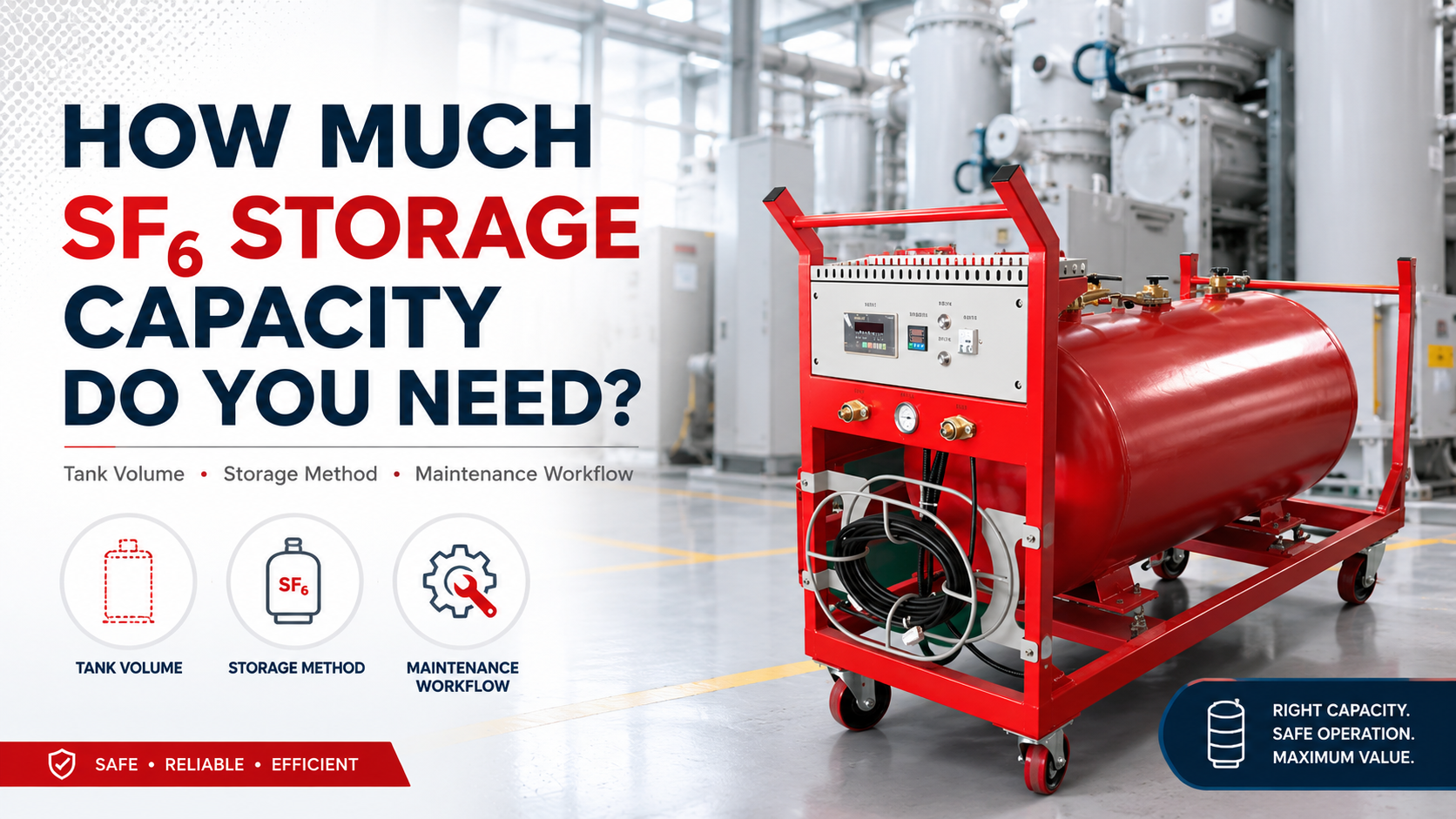
SF6 storage capacity is an important specification when selecting an SF6 recovery unit. A unit may provide sufficient SF6 recovery speed but still interrupt a maintenance operation if the storage system cannot receive the required recovered SF6 quantity.
In simple terms, SF6 recovery speed describes how fast the unit recovers gas, while SF6 storage capacity describes how much recovered SF6 the system can store.
Therefore, engineers should select SF6 storage capacity according to the recovered SF6 quantity, storage method, and maintenance workflow—not storage tank volume alone.
What Does SF6 Storage Capacity Mean?
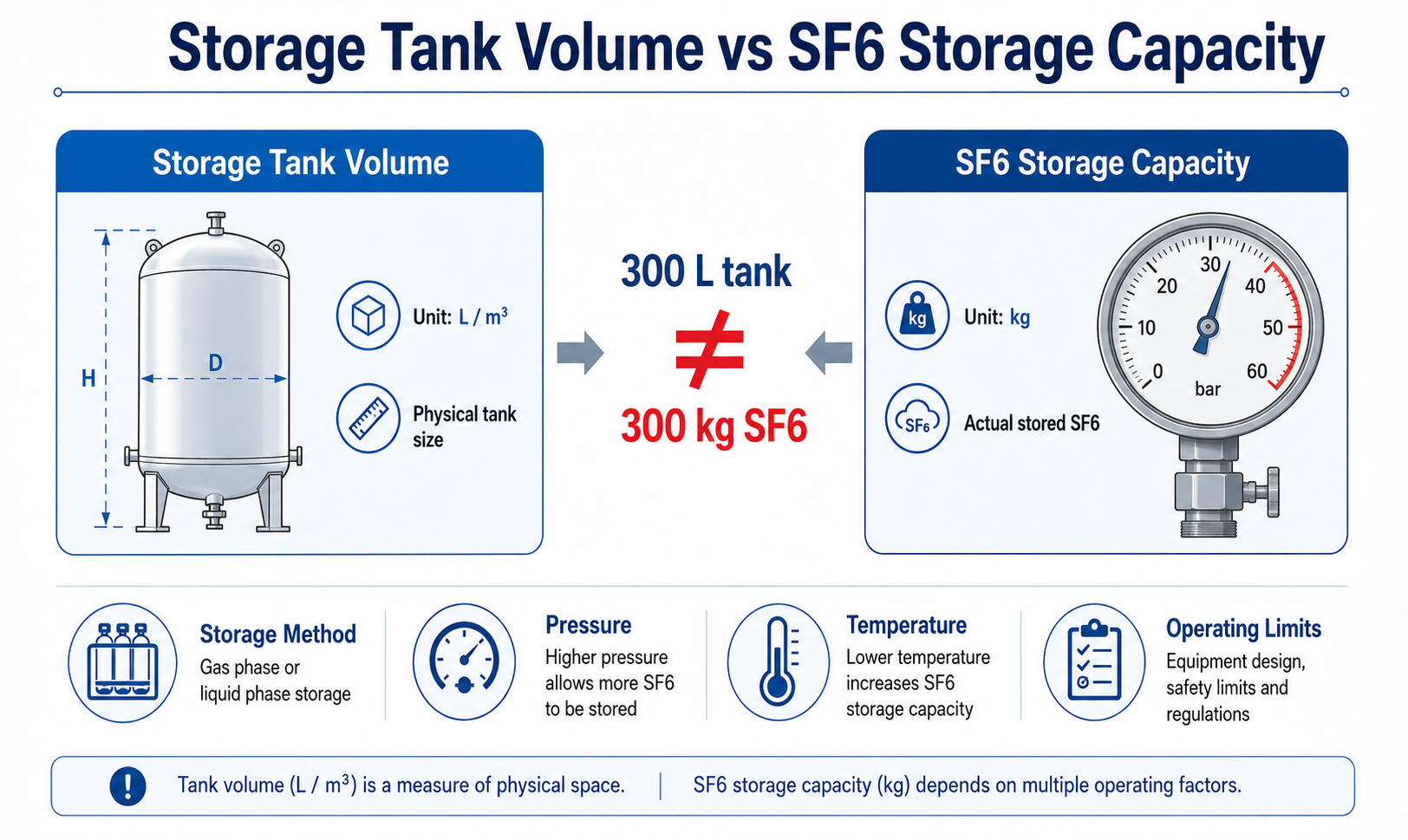
SF6 storage capacity and storage tank volume are related, but they are not the same specification.
Storage tank volume describes the physical volume of the tank and normally uses liters or cubic meters.
SF6 storage capacity describes how much SF6 the storage system can hold under its specified operating conditions.
For example, a 300 L storage tank does not automatically mean 300 kg of SF6 storage capacity. Actual storage capacity also depends on the storage method, pressure, temperature, allowable filling level, and storage tank operating limits.
Therefore:
Storage tank volume does not directly equal SF6 storage capacity.
This distinction is important when comparing SF6 recovery units.
Start With the Recovered SF6 Quantity
The first step is to determine the maximum recovered SF6 quantity during one maintenance operation.
Engineers should consider:
- SF6 quantity in each gas compartment;
- number of gas compartments;
- maximum recovered SF6 quantity before gas transfer;
- whether several gas compartments require continuous recovery;
- whether recovered SF6 remains in storage or returns to the equipment.
The supplied selection guide also treats the SF6 quantity handled during one maintenance operation as the primary basis for selecting storage capacity.
Accordingly, SF6 storage capacity should match the maximum recovered SF6 quantity that the system must receive before transfer, purification, or refilling begins.
Gaseous SF6 Storage vs Liquid SF6 Storage
The storage method directly affects the required storage tank volume.
Gaseous SF6 Storage
Gaseous SF6 requires more physical storage volume for the same SF6 mass.
Therefore, a system that uses gaseous SF6 storage generally needs more storage space.
Liquid SF6 Storage
Liquid SF6 has a higher storage density. As a result, the system can store more SF6 mass within the same storage tank volume.
The supplied equipment information includes 300 L, 600 L, and 1,000 L storage tanks used for liquid SF6 storage.
For this reason:
Storage tank volume alone cannot be used to compare the SF6 storage capacity of different recovery systems.
Engineers should always check the actual storage method and operating conditions.
Built-In Storage Tank or External Storage Tank?
An SF6 recovery unit may use a built-in storage tank, an external storage tank, or SF6 cylinders.
Built-In Storage Tank
A built-in storage tank supports compact and integrated SF6 gas handling. It works well for routine GIS maintenance, mobile maintenance operations, purification, and on-site refilling.
The supplied RF equipment data includes several built-in storage tank configurations:
| Equipment | Built-In Storage Tank |
|---|---|
| RF-051 Series | 70 L |
| RF-151 Series | 120 L |
| RF-300J | 300 L |
| RF-391 Series | 220–600 L |
These configurations show how storage tank volume changes with equipment size and application.
External Storage Tank
An external storage tank adds SF6 storage capacity when the built-in storage tank cannot hold the required recovered SF6 quantity.
It is useful for:
- larger recovered SF6 quantities;
- multiple gas compartments;
- batch maintenance;
- separate SF6 storage;
- off-site processing.
The supplied RF-CG data includes 300 L, 600 L, and 1,000 L external storage tank configurations.
Therefore, the correct storage configuration depends on the maintenance workflow rather than the largest available storage tank.
Match SF6 Storage Capacity to the Maintenance Workflow
Different SF6 gas handling processes require different storage configurations.
Recovery, Purification, and On-Site Refilling
When operators recover, purify, and refill SF6 at the same site, the built-in storage tank mainly provides temporary storage during the maintenance operation.
In this case, the system may not need to hold several complete SF6 batches at the same time.
Recovery and Storage for Later Processing
If recovered SF6 remains in storage for later processing or transportation, the storage system must provide enough SF6 storage capacity for the required batch.
Therefore, a larger built-in storage tank or external storage tank may be necessary.
Centralized SF6 Gas Handling
Large maintenance programs may use a stationary recovery and purification system instead of a mobile SF6 recovery unit.
For example, the supplied RF-102J configuration includes:
- 120 L buffer tank;
- 4,000 L liquid SF6 storage tank;
- 4,000 L gaseous SF6 storage tank;
- 300 L purification tank.
This type of configuration supports centralized, high-volume SF6 gas handling.
SF6 Recovery Speed and Storage Capacity Must Work Together
High SF6 recovery speed does not automatically mean a short maintenance operation.
If the storage system reaches its usable SF6 storage capacity before recovery is complete, the operator may need to stop and transfer the recovered SF6 before continuing.
The process may become:
Recovery → Stop → Transfer SF6 → Continue Recovery
These interruptions increase the total maintenance time.
Therefore, engineers should evaluate SF6 recovery speed and SF6 storage capacity together.
The RF-300J provides a clear example:
- SF6 recovery speed: 150 kg/h
- built-in storage tank volume: 300 L
The 150 kg/h value describes SF6 recovery performance.
The 300 L value describes storage tank volume.
These specifications support the same SF6 gas handling process, but they describe different equipment functions. A recovery unit performs more efficiently when both specifications match the actual maintenance requirement.
How to Select SF6 Storage Capacity
A practical selection process starts with the maintenance operation.
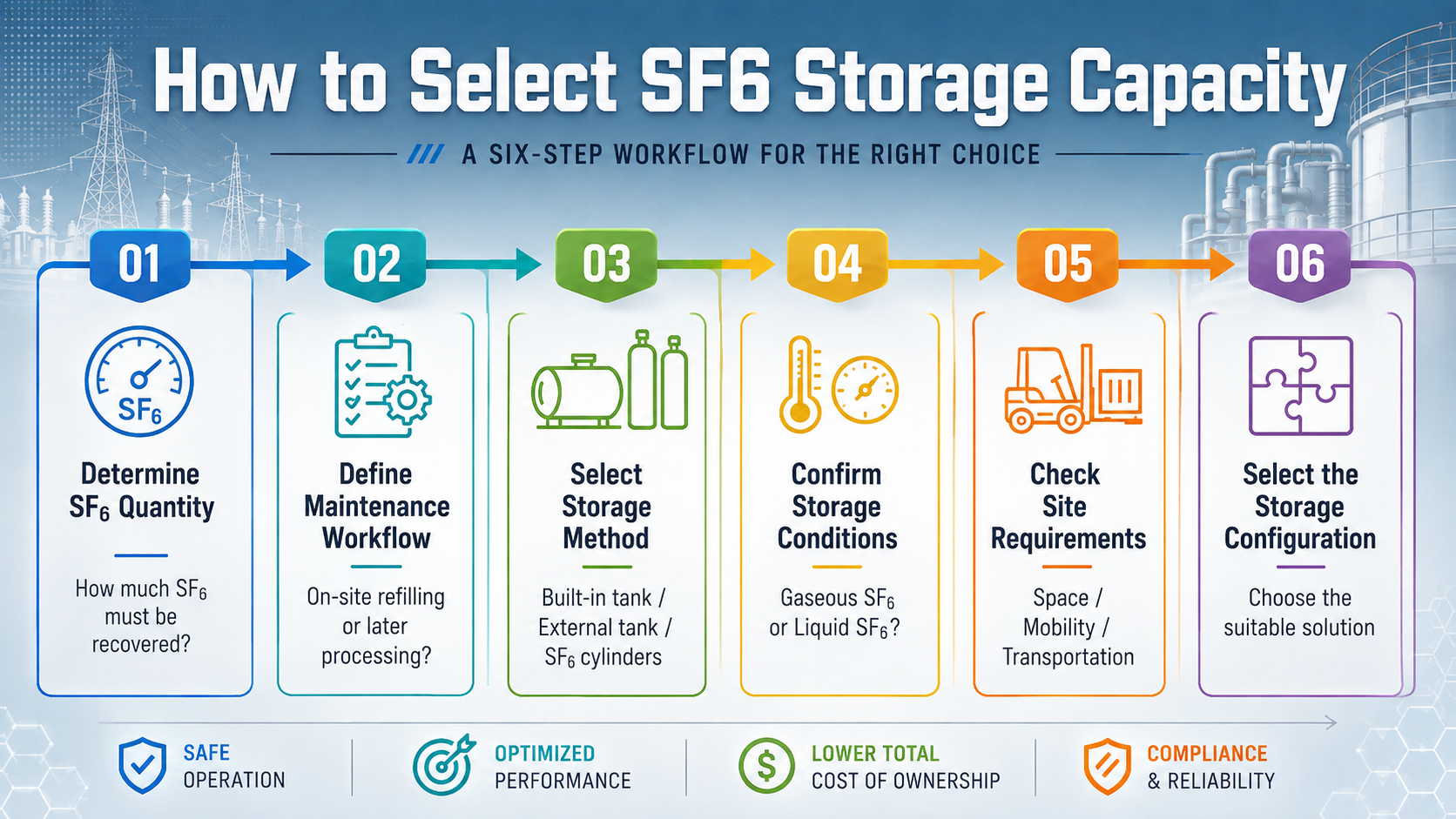
First, determine the maximum recovered SF6 quantity.
Next, decide whether the recovered SF6 will:
- return to the equipment;
- remain in storage;
- undergo purification;
- move to another processing location.
Then select the storage configuration:
Built-in storage tank → compact and integrated SF6 gas handling
External storage tank → larger and expandable SF6 storage capacity
SF6 cylinders → flexible and modular storage
Finally, confirm that the storage tank volume, operating limits, site space, and transportation conditions match the project.
This approach is more reliable than selecting an SF6 recovery unit from storage tank volume alone.
What Information Is Needed Before Selecting SF6 Storage Capacity?
Before selecting an SF6 recovery unit, engineers should provide:
- SF6 quantity per gas compartment;
- number of gas compartments;
- maximum recovered SF6 quantity per maintenance operation;
- on-site refilling or off-site processing requirement;
- built-in storage tank or external storage tank requirement;
- available installation and transportation conditions.
With this information, engineers can evaluate SF6 recovery speed and SF6 storage capacity as part of one complete SF6 gas handling system.
For projects that require further review of recovered SF6 quantity, storage configuration, or recovery requirements, technical information can be exchanged with our engineering team at [email protected]. This keeps equipment selection focused on the actual maintenance operation rather than one storage tank specification.
FAQ
Does a 300 L storage tank hold 300 kg of SF6?
No. Storage tank volume and SF6 storage capacity are different specifications. Actual SF6 storage capacity depends on the storage method and operating conditions.
How do I select the required SF6 storage capacity?
Start with the maximum recovered SF6 quantity that the SF6 recovery unit must store before transfer, purification, or refilling.
Is liquid SF6 storage more compact than gaseous SF6 storage?
Yes. Liquid SF6 has a higher storage density, so it requires less storage tank volume for the same SF6 mass.
Is a larger storage tank always better?
No. The correct storage tank volume depends on the recovered SF6 quantity, storage method, maintenance workflow, mobility, and site conditions.