SF6 Gas Recovery Unit Maintenance After Use
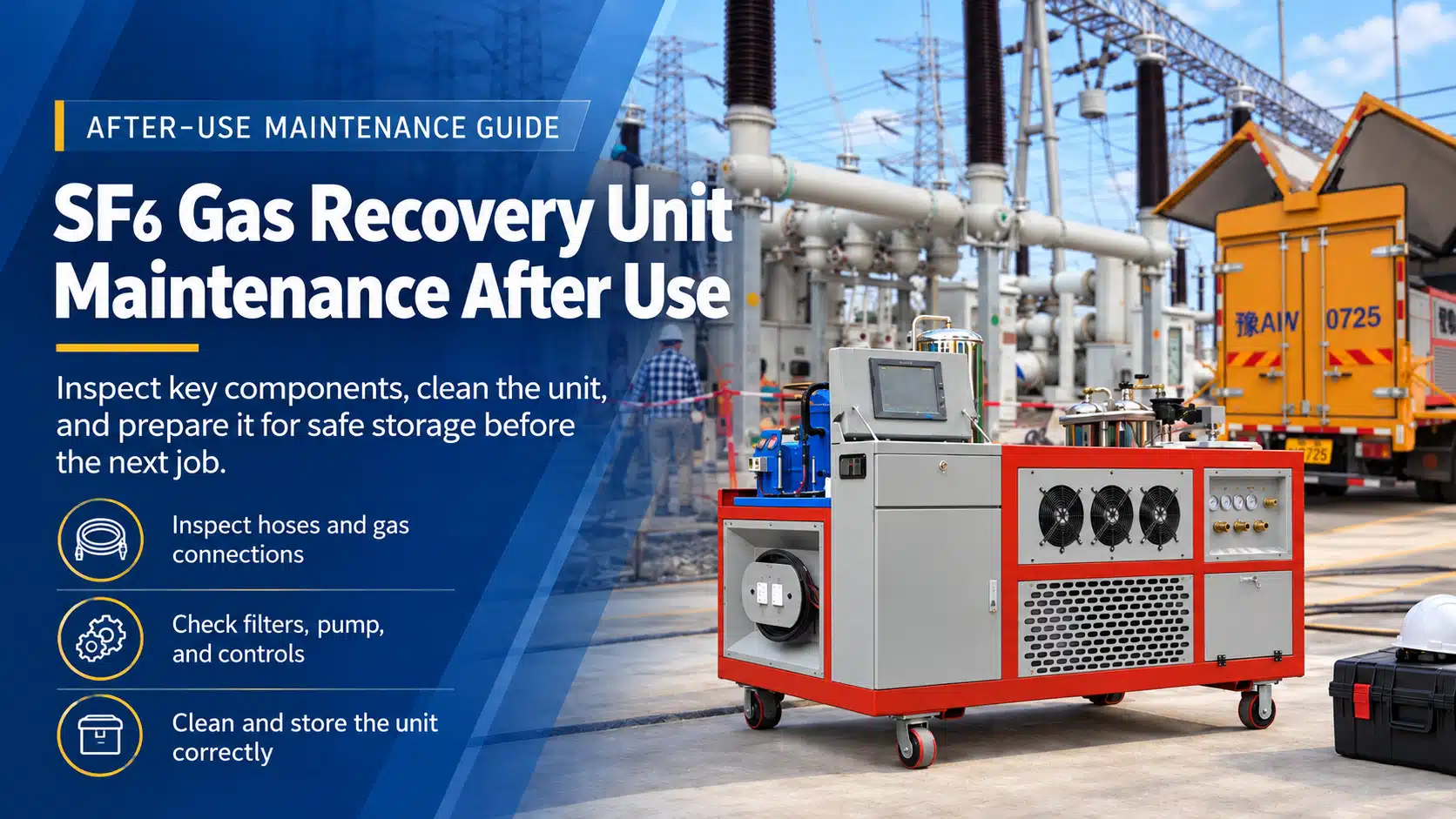
An SF6 gas recovery unit is used repeatedly under field conditions. Hoses, couplings, filters, pumps, and controls are involved in every job. After recovery, the unit should not simply be switched off and stored. A short inspection can reveal damage, contamination, leaks, or abnormal operation before the next job.
After-use maintenance keeps the SF6 gas recovery unit clean, leak-tight, and ready for service. It is different from scheduled maintenance. Routine work covers inspection, cleaning, condition checks, recordkeeping, and storage preparation. Filter replacement, oil service, calibration, and repairs follow separate maintenance schedules.
1. Inspect Hoses, Couplings, and Gas Connections
Start with the gas path. Hoses, couplings, and connections are handled during every recovery job. They are exposed to dirt, moisture, wear, and repeated connection cycles. Inspect hoses for cuts, cracks, abrasion, crushing, sharp bends, or contamination. A damaged hose can affect sealing or gas flow. Any questionable hose should be checked before further use.
Inspect couplings, fittings, sealing surfaces, and gas connections at the same time. Look for damaged threads, worn seals, dirt, or physical damage. Connections should fit smoothly and seal without excessive force. After disconnecting the hoses, keep open connections clean and dry. Install the correct caps or plugs before storage. This helps protect the gas path inside the SF6 gas recovery unit.
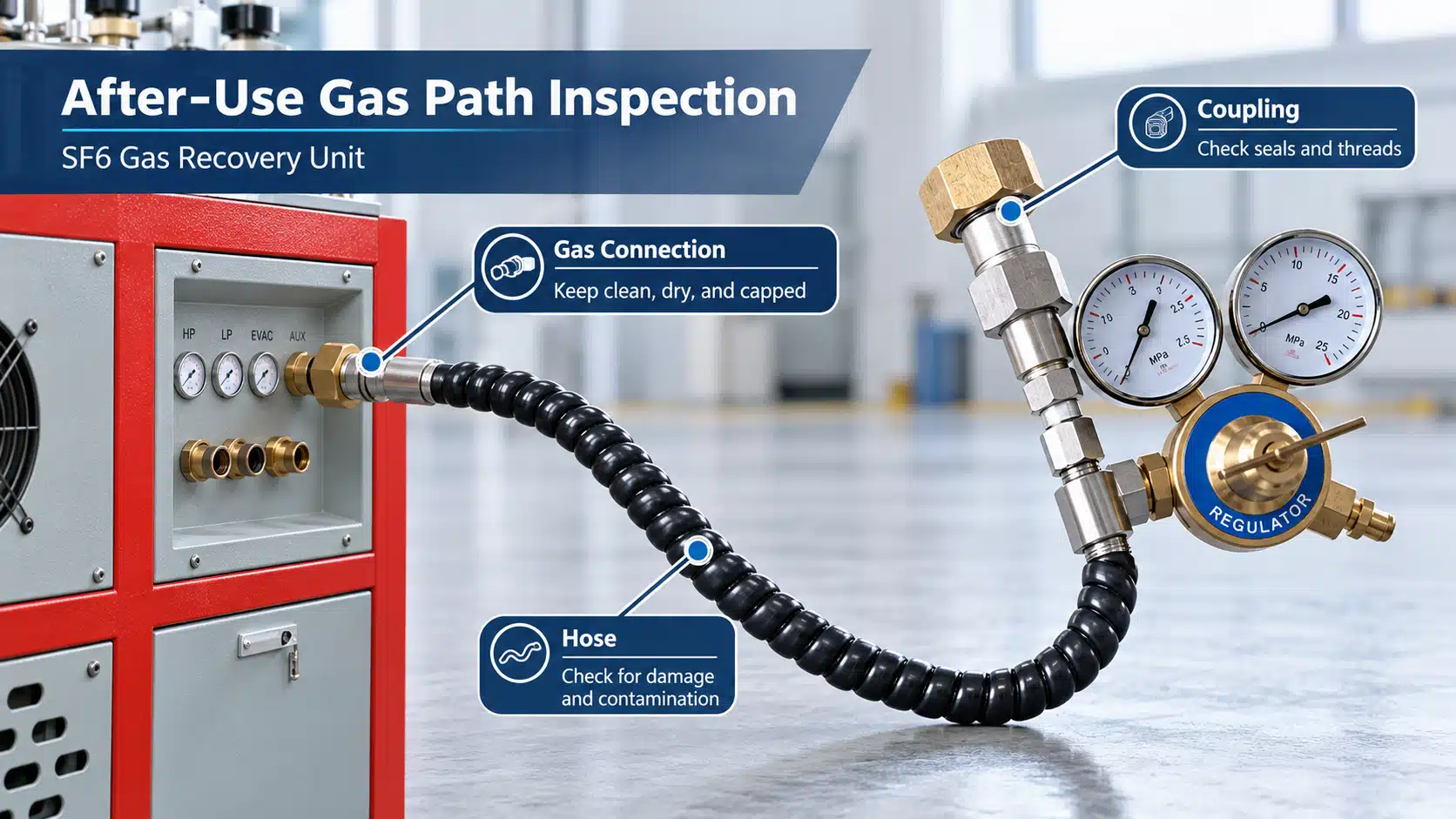
A full leak test is not required after every normal job. Routine inspection should identify visible damage or connection problems. Suspected leaks or damaged sealing surfaces require further inspection before the next use.
2. Check Filters and the Internal Gas Circuit
Filters help protect the internal gas circuit from particles, moisture, or other contamination. Their function depends on the SF6 gas recovery unit design. Check filter indicators where fitted and note any unusual flow restriction during operation. Inspect accessible piping, valves, and gas lines for contamination, damage, or signs of leakage.
Filters do not need replacement after every recovery job. Service intervals depend on operating hours, gas condition, contamination, filter type, and equipment design. The same applies to drying elements and molecular-sieve cartridges where fitted. Follow the manufacturer’s instructions for inspection, replacement, or other service.
Maintenance records can help identify changes over time. Record filter changes, unusual pressure drops, and noticeable changes in equipment performance. Repeated restrictions or abnormal readings may indicate that further inspection is needed.
3. Inspect the Compressor, Vacuum Pump, and Cooling System
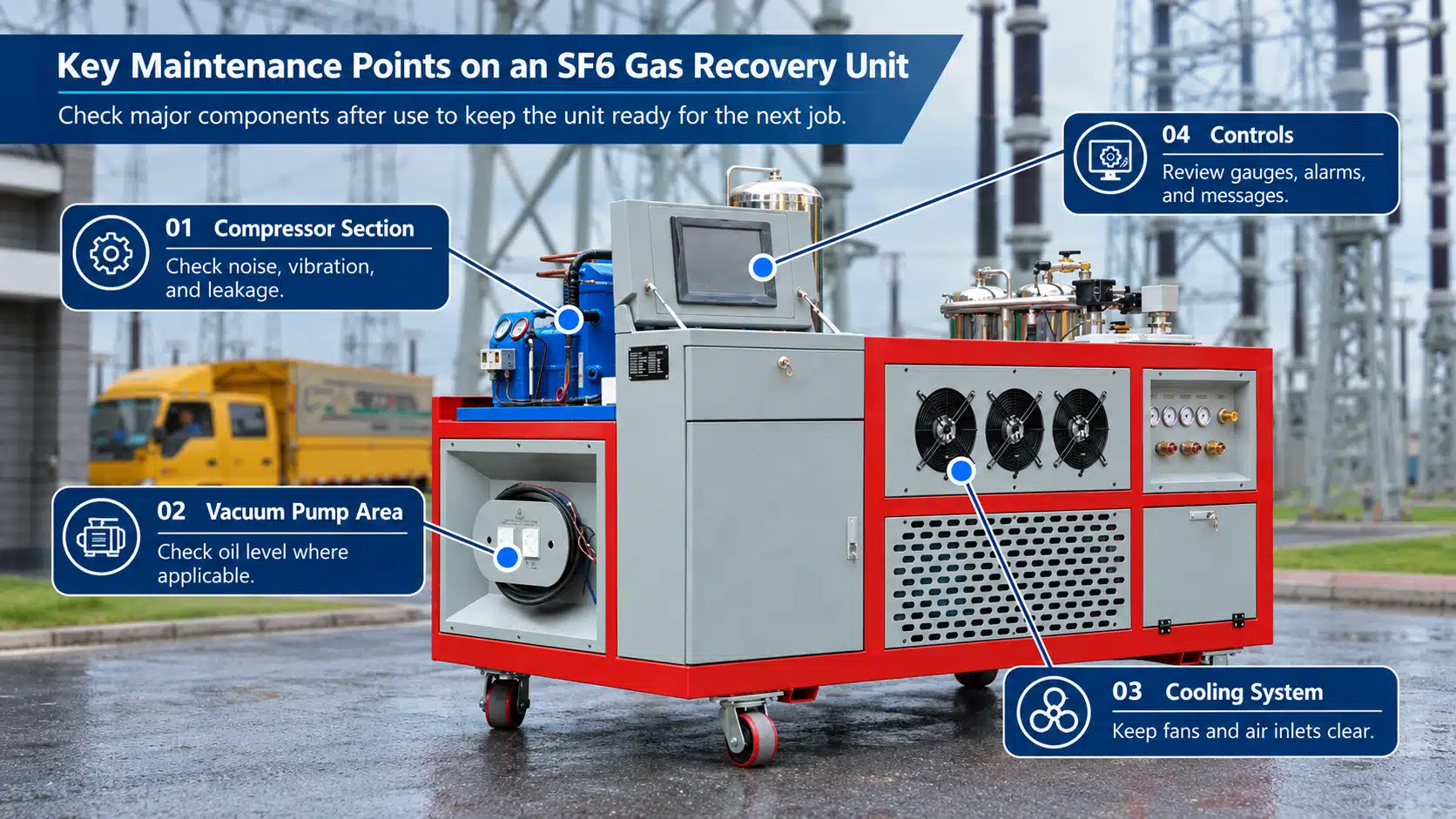
Check the main operating components for changes from normal behavior. They do not need to be disassembled after every job. For the compressor, note unusual noise, vibration, temperature rise, leakage, or unstable operation. An oil-free compressor does not require compressor-oil service. Its mechanical condition, connections, and cooling still require inspection.
If the SF6 gas recovery unit has a lubricated vacuum pump, check its oil level and condition. Low oil level, discoloration, contamination, leakage, or unusual noise may indicate a service need. Oil changes should follow the pump manufacturer’s schedule. They are not normally required after every recovery job.
Keep the cooling system clean and free from blockage. Check fans, air inlets, radiators, or heat exchangers where fitted. Remove dust or debris that restricts airflow. Poor cooling can increase operating temperature during longer recovery work.
Changes from normal operation should be recorded before the next use. This includes unusual temperature, vibration, leakage, alarms, or unexpected shutdowns. New noise or vibration can also indicate a developing mechanical problem.
4. Check Gauges, Sensors, Alarms, and Controls
An SF6 gas recovery unit relies on instruments and controls throughout operation. These systems indicate pressure, vacuum, temperature, weight, and equipment status. Check whether pressure and vacuum gauges responded normally during the job. Review temperature indicators, weighing systems, and other sensors where fitted. Record readings that were unstable or clearly different from normal.
PLC or touchscreen systems may show warnings or fault messages. Do not ignore an alarm simply because it later disappeared. Record the message and the operating condition when it occurred. This information may help identify an intermittent fault. Inspect emergency stops, switches, alarms, and control panels for visible damage.
Full calibration is not part of normal after-use maintenance. Calibration should follow the instrument or equipment schedule. After each job, focus on unusual readings, alarms, and control behavior.
5. Clean and Prepare the Unit for Storage
After the functional checks, clean the unit and prepare it for storage. Remove dirt, dust, and moisture from external surfaces. Pay attention to control panels, ventilation openings, hose areas, and gas connections. Do not allow cleaning materials into electrical components or the gas circuit.
Store hoses without sharp bends or excessive tension. Protect accessories from impact or other damage. Cap open gas connections and place valves in the specified storage position. Disconnect the power supply safely. Store the SF6 gas recovery unit in a dry, protected area. Avoid exposure to rain, heavy dust, standing water, or corrosive conditions.
Extended storage may require additional work. Requirements can vary with the compressor, vacuum pump, batteries, and internal gas circuit. Follow the manufacturer’s storage instructions when the unit will remain unused for a long period.
Before storage, record any faults or service needs found during the job. Note damaged hoses, abnormal alarms, unusual noise, or other problems. The next operator should know the equipment condition before starting work.
After-Use Maintenance Checklist
A short checklist helps keep the inspection consistent. It also reduces the chance of missing a basic maintenance item.
| After-Use Item | What to Check |
|---|---|
| Hoses | Damage, wear, contamination, and sealing condition |
| Couplings and fittings | Seals, threads, cleanliness, and damage |
| Gas connections | Clean, dry, and properly capped |
| Filters | Condition, indicators, and unusual flow restriction |
| Internal gas circuit | Contamination, leakage, or visible damage |
| Compressor | Noise, vibration, temperature, and leakage |
| Vacuum pump | Oil condition where applicable, noise, and leakage |
| Cooling system | Airflow, cleanliness, and blockage |
| Gauges and sensors | Abnormal readings or behavior |
| Alarms and controls | Warnings, faults, and control response |
| Unit exterior | Dirt, moisture, and physical damage |
| Maintenance record | Faults, abnormal conditions, and service needs |
This checklist does not replace the manufacturer’s maintenance instructions. Individual models may require additional checks or different service procedures.
Keep the SF6 Gas Recovery Unit Ready for the Next Job
After-use maintenance keeps the gas path clean and helps identify problems before the next job. It also protects the SF6 gas recovery unit during storage. Inspection, cleaning, capping, alarm review, and recordkeeping belong to the routine after-use process. Filter replacement, oil service, calibration, and repairs should follow the manufacturer’s maintenance schedule.
A clean unit with current service records is easier to prepare for field work. Problems found during one job should be addressed before the equipment is needed again.
For equipment selection or project support, contact [email protected]. Include your switchgear type, SF6 quantity, gas compartment volume, and site conditions.
Frequently Asked Questions
Should an SF6 gas recovery unit receive a full service after every use?
No. Basic inspection and cleaning should follow each job. Full service depends on equipment condition and the manufacturer’s maintenance schedule.
How often should filters be replaced?
There is no single interval for every recovery unit. Service depends on filter condition, operating hours, contamination, and manufacturer recommendations.
Does the vacuum pump need an oil change after every recovery job?
Usually not. Lubricated pumps should follow the manufacturer’s oil-service schedule. Check oil level and condition when required.
What should be done with hoses and couplings after use?
Inspect them for damage, contamination, worn seals, and damaged threads. Keep connections clean, dry, and capped during storage.
How should an SF6 gas recovery unit be stored after use?
Keep the unit clean and dry. Secure the hoses, cap open connections, and store the equipment in a protected area.