SF6 Gas Management: What Matters During the SF6-Free Transition?
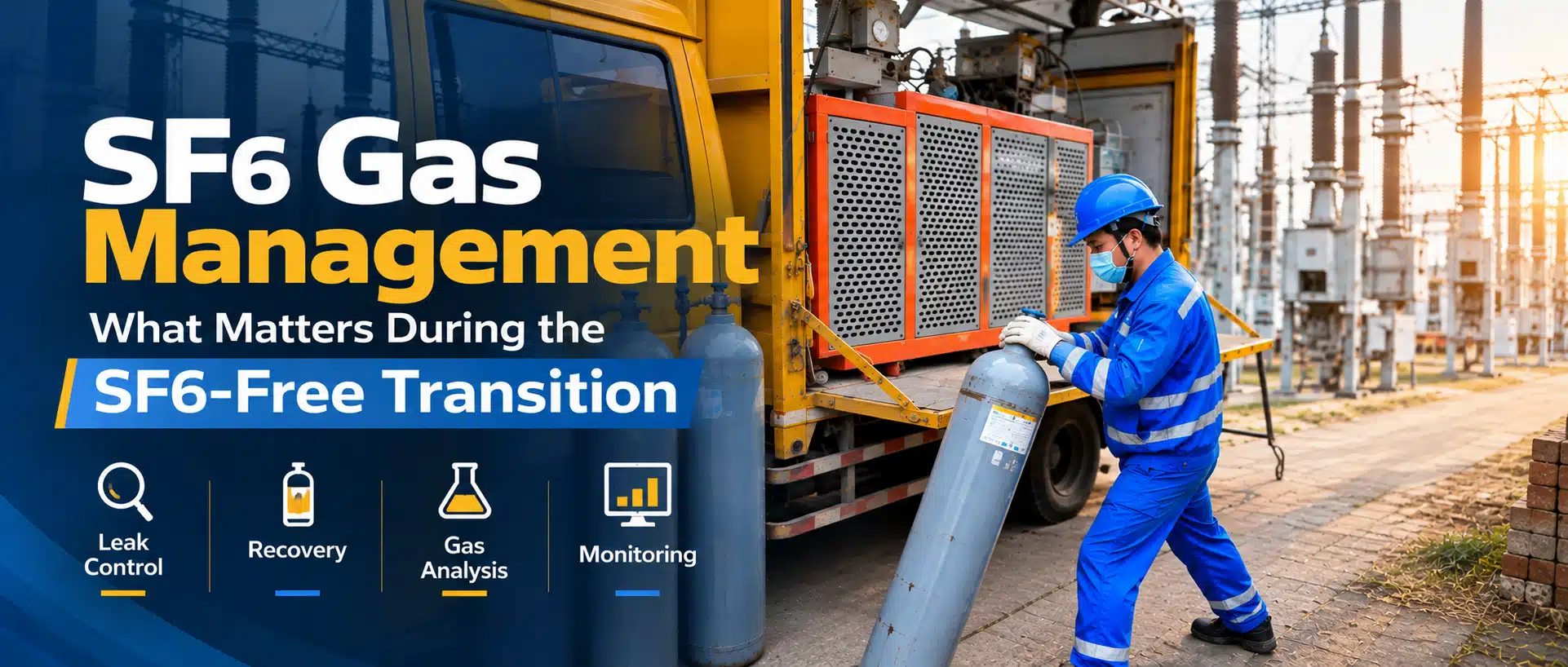
The power industry is moving toward SF6-free switchgear, but many existing SF6 systems will remain in service for years. GIS, circuit breakers, and other SF6-filled equipment still require maintenance and proper gas handling throughout their service life.
This makes SF6 gas management an important part of the transition. The main priorities are to control gas losses, recover SF6 during maintenance, restore the required gas condition before equipment returns to service, and keep reliable monitoring and service records.
1. Control SF6 Losses Early
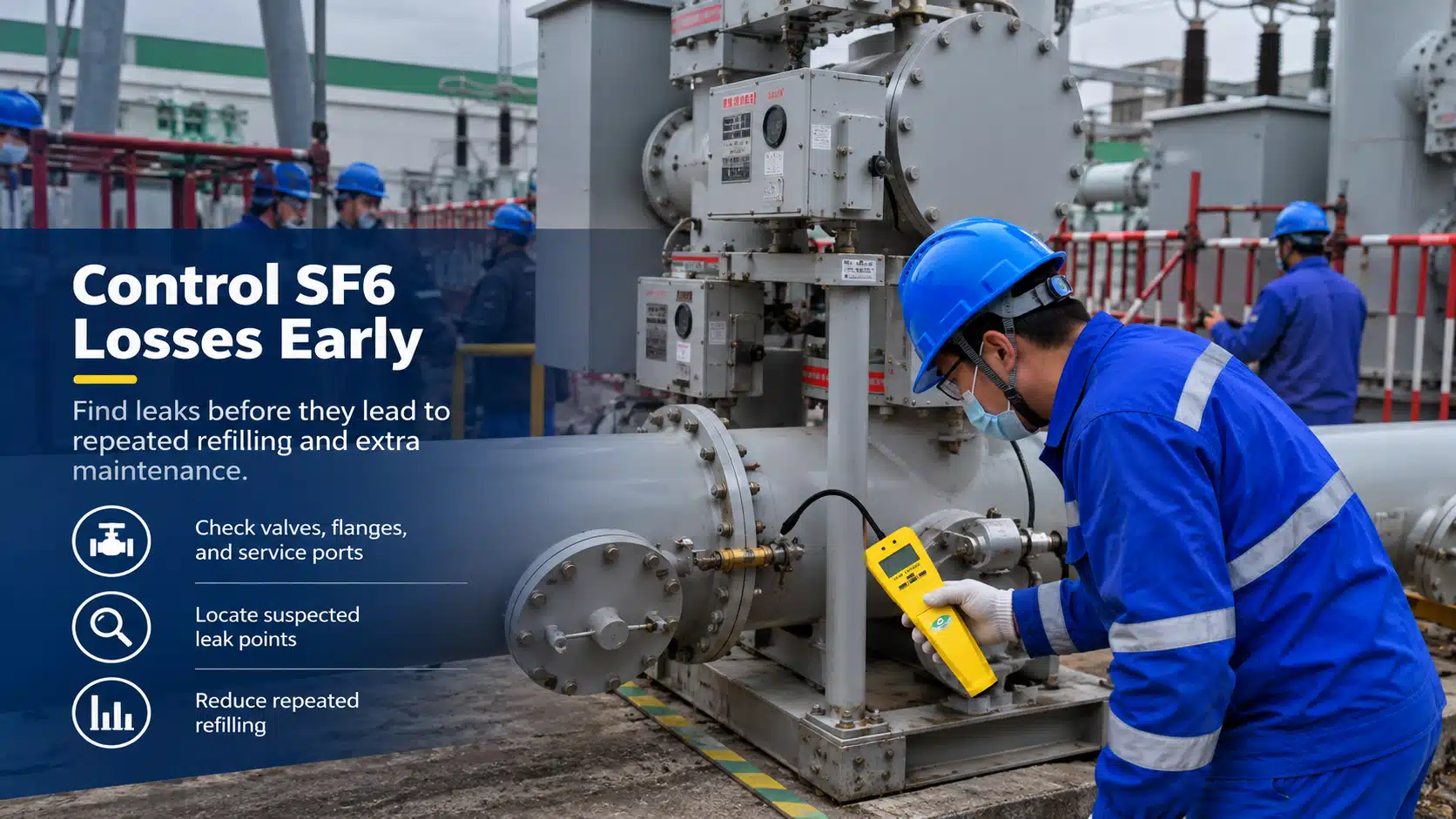
SF6 gas management starts with keeping the gas inside the equipment. Leaks can develop at valves, flanges, service ports, seals, and other gas connections. Regular inspection helps identify abnormal gas loss before repeated refilling or more extensive repairs are needed.
Fixed monitoring systems and portable leak detectors have different roles. Depending on the system design, fixed monitoring may track gas density, pressure, or ambient SF6 concentration over time. When an abnormal condition is found, a portable SF6 leak detector can help locate the suspected leak point.
Monitoring can show that operating conditions have changed, while leak detection helps find where the gas is escaping. Finding leaks early can reduce SF6 loss and help maintenance teams plan repairs before the problem becomes more serious. Repeatedly adding gas without locating the leak does not solve the cause of the problem.
2. Recover SF6 During Maintenance
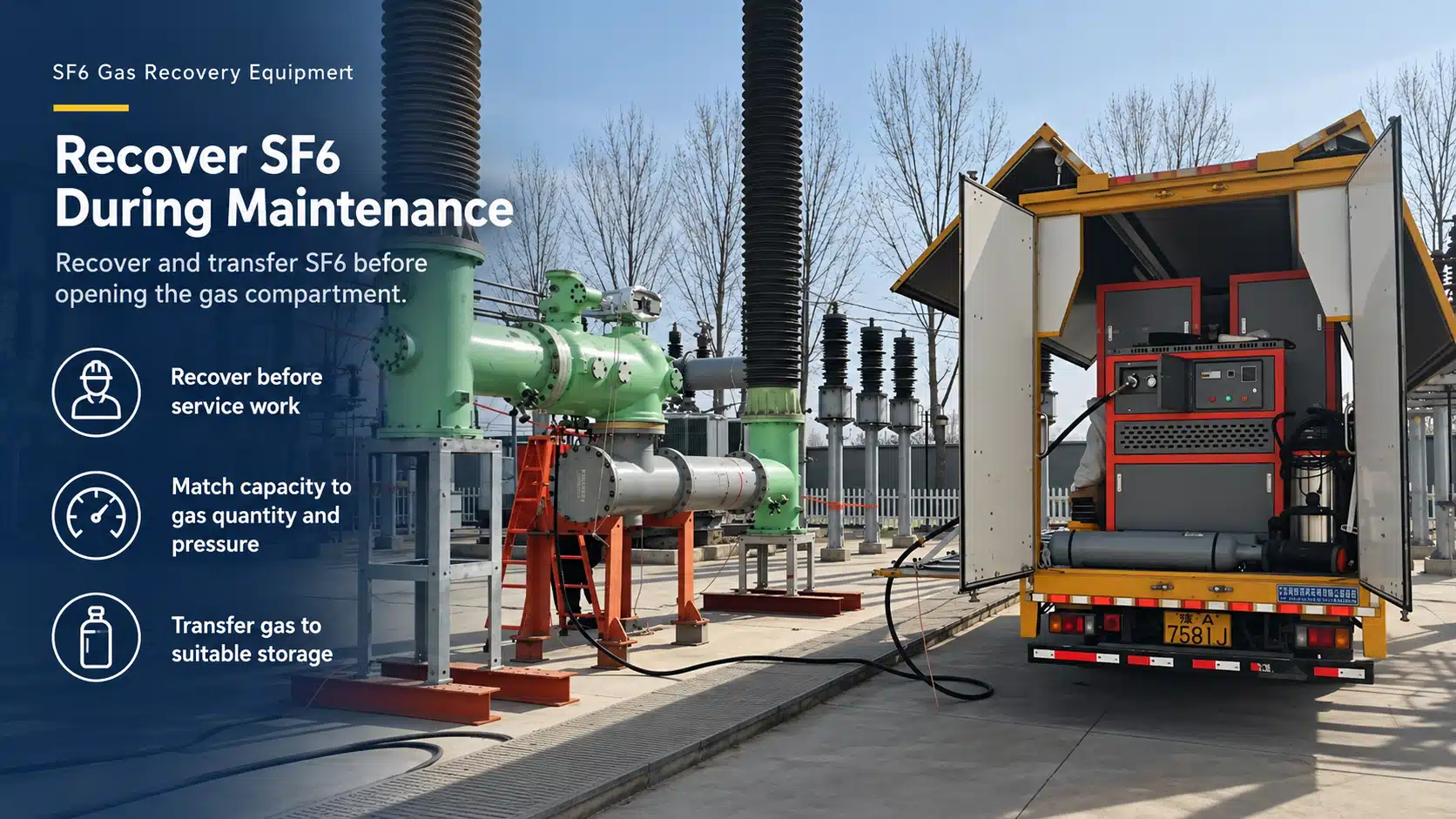
When an SF6 gas compartment must be opened for inspection, repair, component replacement, or decommissioning, the gas should be recovered before work begins. SF6 should be contained and transferred rather than released during maintenance.
Recovery performance depends on the amount of SF6 in the compartment, operating pressure, required final recovery pressure, recovery equipment capacity, hose size, flow resistance, and storage capacity. These factors should be considered when selecting and setting up the recovery equipment.
The required final recovery pressure depends on the switchgear, maintenance procedure, and recovery system. Recovered SF6 should be transferred to an appropriate storage vessel. Gas quality should be checked when required before further use.
A controlled recovery process reduces avoidable gas loss and prepares the compartment for maintenance.
3. Restore the Required Gas Condition Before Returning Equipment to Service
After maintenance, the gas compartment must be prepared before refilling. Proper evacuation helps remove air and moisture before SF6 is introduced. Hoses, couplings, valves, and temporary connections should also be checked before filling begins.
The compartment should be filled to the specified pressure or gas density. The required value should follow the equipment manufacturer’s instructions, utility procedures, or project requirements.
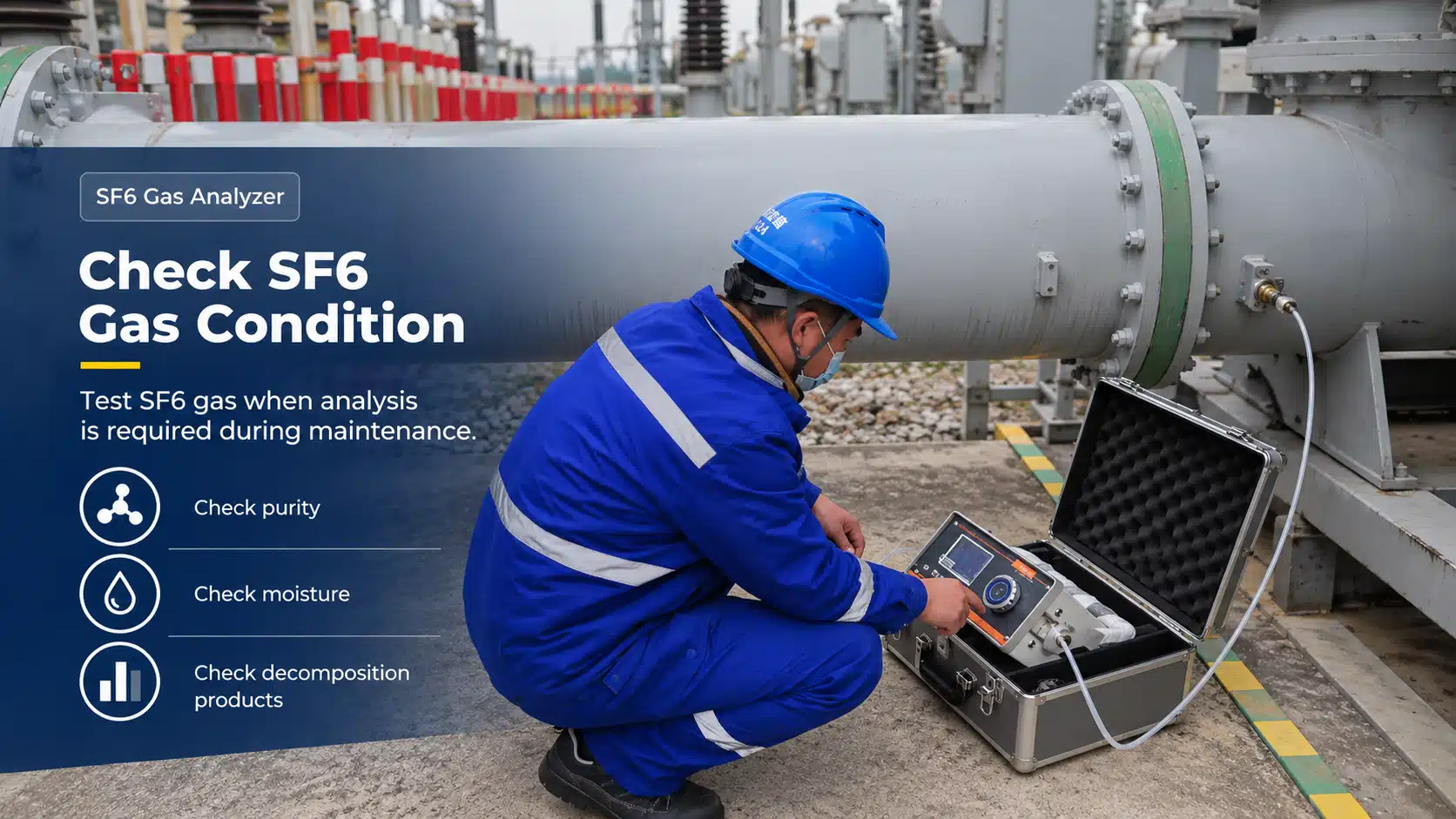
Not every maintenance task requires a complete SF6 gas analysis. When testing is required, an SF6 gas analyzer can be used to check parameters such as purity, moisture, and decomposition products. The need for analysis depends on the maintenance work, equipment condition, OEM requirements, and service procedure.
The goal is not simply to refill the compartment. It is to restore the gas compartment to the condition required for continued operation.
4. Use Monitoring and Records for Long-Term SF6 Management
SF6 gas management does not end when maintenance is completed. Monitoring and service records help maintenance teams track equipment condition over time. Changes in gas density, pressure, ambient SF6 concentration, or alarm status can help identify conditions that need further inspection.
Service records should include relevant gas quantities, recovery and refilling activities, leak findings, repairs, and gas analysis results when testing is performed. Keeping these records together makes it easier to compare current conditions with previous maintenance work.
Repeated gas additions, recurring leaks, or repeated repairs may show that equipment needs closer inspection or a change in its maintenance plan. Records can also support future replacement decisions by showing how the equipment has performed over time.
Together, monitoring and service records support long-term management of the existing SF6 fleet.
What Should SF6 Gas Management Focus on During the Transition?
New switchgear is moving toward SF6-free technology faster than existing SF6 equipment is being retired. During this period, SF6 gas management should focus on controlling leaks, recovering gas during maintenance, restoring the required gas condition, and keeping reliable service records.
The transition is not only about using less SF6 in new equipment. It is also about managing the SF6 already in service more carefully.
For SF6 recovery, filling, gas analysis, leak detection, or monitoring projects, equipment should be selected based on the switchgear type, gas quantity, compartment volume, and operating requirements. For equipment selection or project questions, contact our team at [email protected].
Frequently Asked Questions
What is the main goal of SF6 gas management during the SF6-free transition?
The main goal is to reduce unnecessary SF6 losses while keeping existing SF6 equipment in proper operating condition throughout its remaining service life.
Does every SF6 maintenance job require gas analysis?
No. The need for SF6 gas analysis depends on the maintenance task, equipment condition, OEM requirements, utility procedures, and project requirements.
What is the difference between SF6 monitoring and leak detection?
Monitoring systems track conditions such as gas density, pressure, or ambient SF6 concentration over time. Portable leak detectors are used to locate specific leak points during inspection.
When should SF6 be recovered from switchgear?
SF6 is typically recovered when a gas compartment must be opened for maintenance, repair, component replacement, or decommissioning. The exact procedure depends on the equipment and maintenance requirements.
Why are SF6 service records important?
Service records help track gas quantities, leak history, recovery and refilling work, repairs, and test results. This information supports maintenance planning and long-term management of existing SF6 equipment.